High‑performing real estate assets: the value of certification in investors’ strategies
Sustainability is now one of the main drivers of value creation and risk mitigation in real estate investment, also thanks to a regulatory framework increasingly aligned with the EU Taxonomy and ESG criteria. Recent industry studies confirm that certified assets outperform conventional stock from an economic and financial standpoint, enabling investors to reduce risk exposure and enhance assets with higher and more stable economic performance over time.
Several international studies show that buildings certified under standards such as LEED, BREEAM or WELL achieve significantly higher price and rent premiums. For investors, this translates into greater portfolio liquidity, driven by stronger demand for sustainable assets from corporate tenants and ESG‑aligned funds.
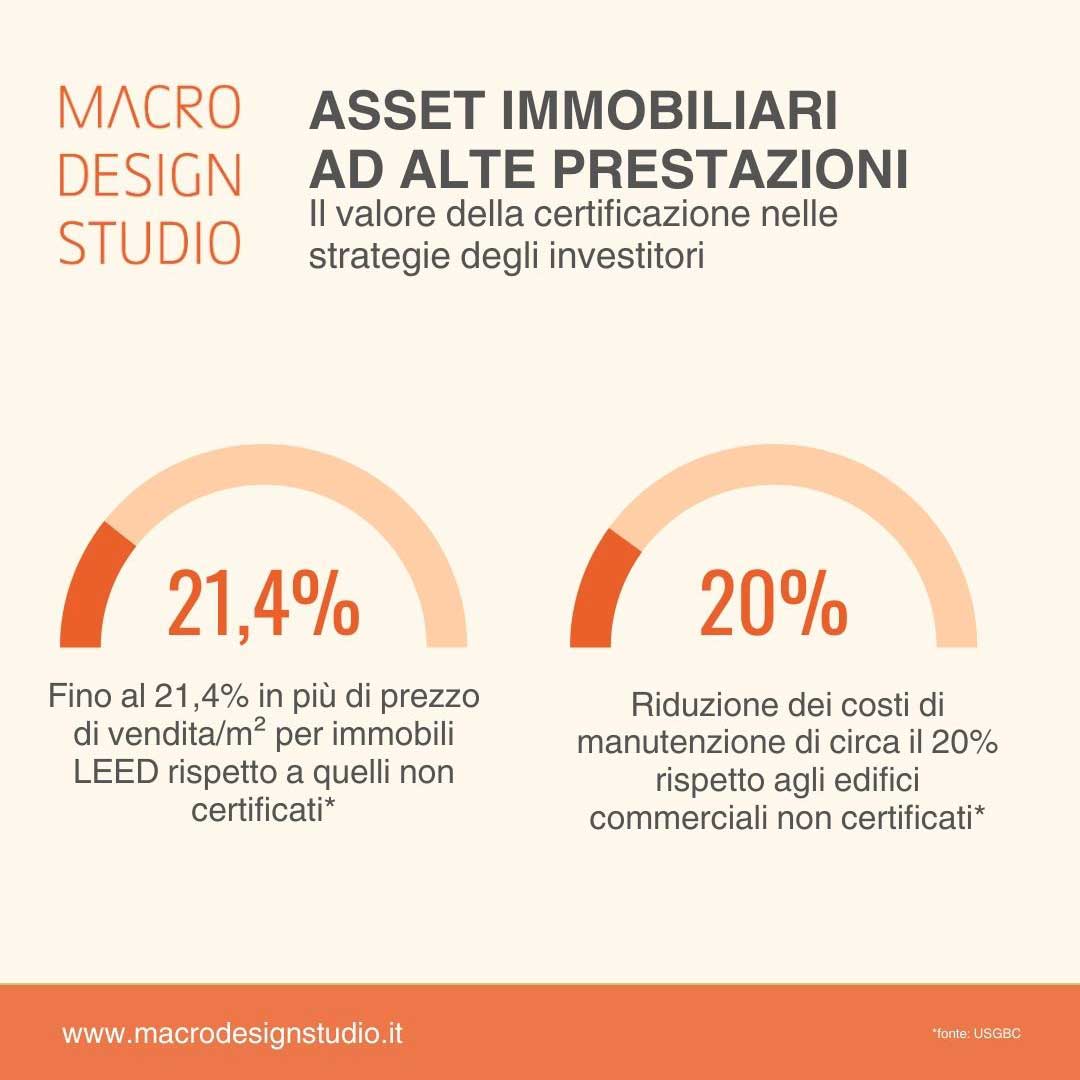
According to the USGBC Impact Report, since 2018 LEED‑certified assets have recorded up to a 21.4% higher market sale price per square metre compared to non‑certified buildings, with value premiums above 25% for Class A offices in the most competitive urban markets.
The study “Green Is Good: The Enduring Rent Premium of LEED‑Certified U.S. Office Buildings” by CBRE (2022) confirms that LEED‑certified offices continue to benefit from a rent premium and lower vacancy rates than conventional stock. Cushman & Wakefield, in “Green Is Good: Sustainable Office Outperforms in Class A Urban Markets” (2021), reports that since 2015 LEED offices have achieved higher average rents and better occupancy levels than the market as a whole.
One of the most compelling arguments for investors and lenders concerns the structural reduction in operating and maintenance costs over the asset life cycle. USGBC estimates that LEED buildings can cut maintenance costs by around 20% compared to typical commercial buildings, thanks to more efficient systems, durable materials and improved management strategies.
The Italian market is increasingly emerging as one of the European benchmarks for certified sustainable buildings. For investors, this trend represents a window of opportunity to secure an early position in a segment with growing demand and supportive regulatory incentives.
The 2023 Impact Report by GBC Italia shows over 19 million square metres of LEED‑like certified space in Italy, delivering annual savings of 170,000 tonnes of CO2 and 1.3 billion litres of water, equivalent to 68 million euro in avoided negative externalities. This strengthens the long‑term value of assets while improving ESG indicators and the reputation of the portfolio. By 2030, that figure is expected to rise to 189 million euro per year, driven by a larger number of certified buildings and the wider adoption of best practices.
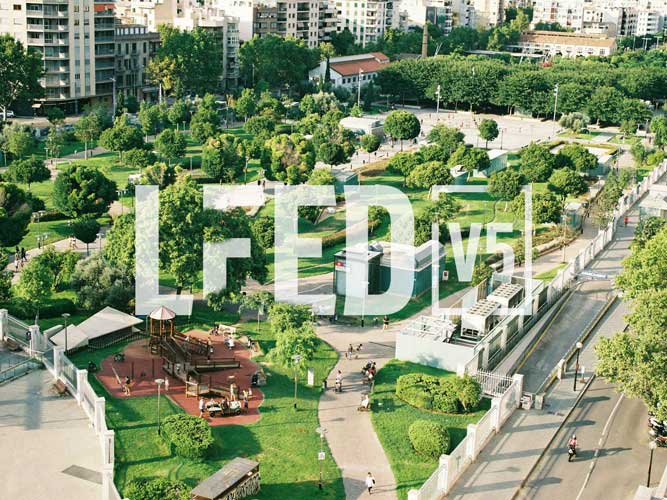
In a context where alignment with the EU Taxonomy, sustainability reporting standards and ESG criteria has become central to credit risk assessment and asset selection by institutional investors, certification is no longer just “a plaque”, but a strategic tool for risk management and value protection. It is also a competitive lever to access lower‑cost capital and keep assets attractive on the market. The recent evolution of LEED v5, which allocates around 50% of points to decarbonisation, makes the link between certification, climate transition and access to qualified capital even clearer.
This is not merely about a formal label, but about transforming portfolios into resilient, efficient assets that are truly aligned with global decarbonisation. Certification enables long‑term strategies: it protects against brown discount, attracts tenants and investors focused on sustainable practices, facilitates green financing, mitigates obsolescence and write‑downs, delivers advantages in the cost of capital and improves the ESG ratings of the portfolio.
If you are considering a new investment, a retrofit project or the upgrading of your portfolio, we can support you in defining the most effective roadmap together.